

You have orders. Now you have a decision to make about your San Diego home.
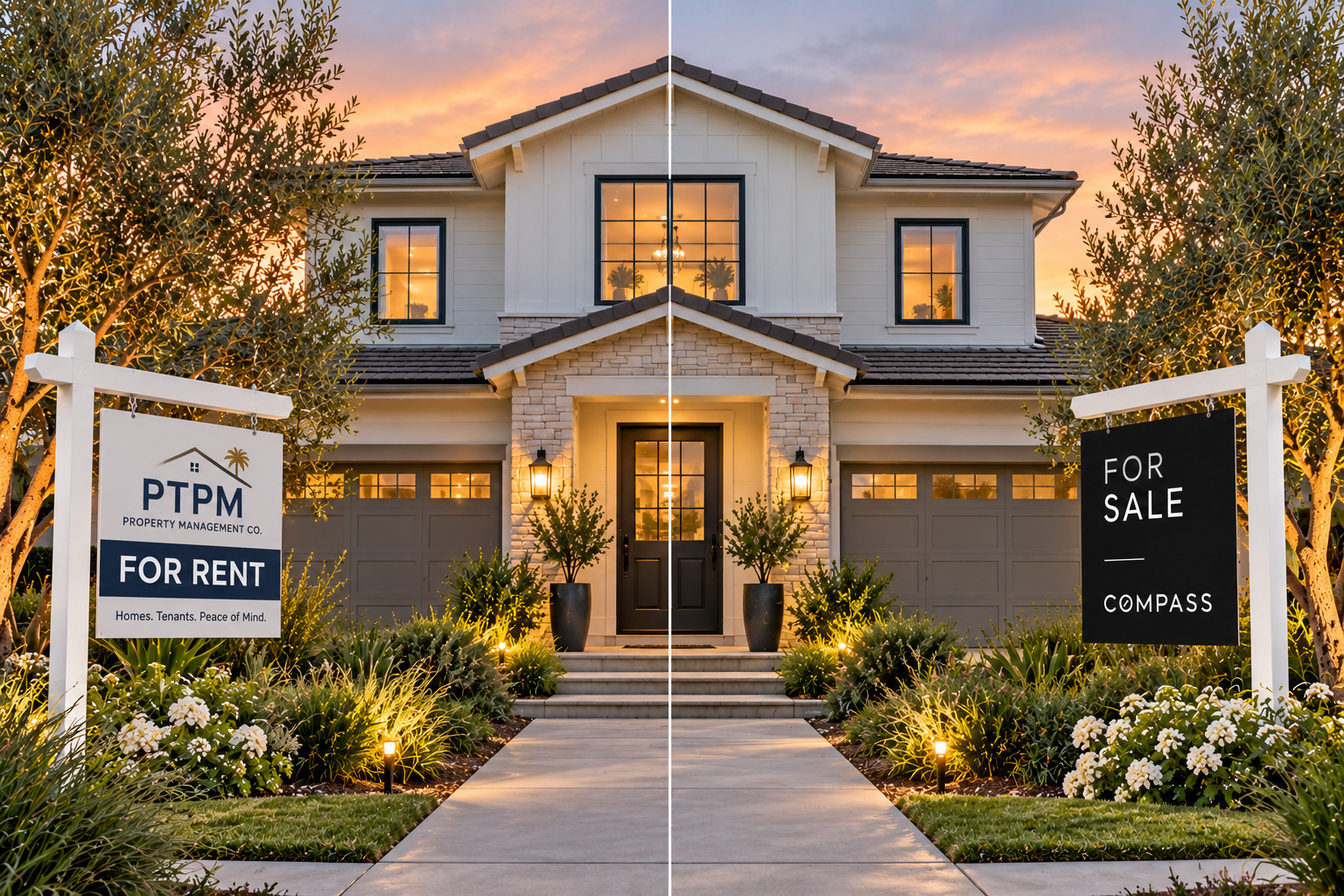
For military homeowners, receiving PCS orders often brings up the same question: Should we sell our house or keep it as a rental?
It's a reasonable question, particularly in San Diego, where home values, rental demand and mortgage rates can make holding onto a property appealing.
Maybe you purchased several years ago and have a mortgage rate you can't imagine giving up. Maybe you've built substantial equity and wonder whether selling would be a mistake. Or perhaps you think you'll return to San Diego someday and want to keep a foothold in the market.
I've spent more than 27 years in real estate, and as a Navy spouse, I've experienced the uncertainty that comes with military moves. I understand why this decision isn't always straightforward.
But I also know that a good mortgage rate doesn't automatically make a home a good rental investment.
Before deciding, I encourage military homeowners to look at five things.
1. Will Your San Diego Home Actually Make Money as a Rental?
Start with the numbers, not the mortgage rate.
The first question is what your property could realistically rent for in today's market. Then subtract the actual costs of owning and operating it.
Those expenses may include:
Mortgage principal and interest
Property taxes and insurance
HOA dues and possible special assessments
Property management fees
Repairs and ongoing maintenance
Vacancy between tenants
Reserves for larger expenses, such as appliances, roofing or HVAC replacement
For example, suppose your home could rent for $4,500 per month.
Your mortgage, taxes, insurance and HOA total $3,700. At first glance, that looks like $800 in monthly profit.
But if you budget $360 for management, $225 for vacancy and $300 for maintenance and capital expenses, you're actually looking at approximately $85 per month in negative cash flow.
That doesn't necessarily mean keeping the home is a bad investment. Your tenant may be helping pay down your mortgage, and the property may appreciate over time.
But it does mean you're making a long-term investment decision—not generating the passive income you might have expected.
And if you're buying another home at your next duty station, that negative cash flow matters.
2. How Much Equity Do You Have—and What Could That Equity Do for You?
This is the part of the conversation I think deserves more attention.
Let's say your San Diego home is worth $1 million and you owe $550,000.
You have approximately $450,000 in gross equity.
Selling expenses would reduce the amount you actually receive, but you may still have a substantial amount of money available for your next move.
That equity could help you purchase a home at your next duty station, reduce your future mortgage payment, pay off higher-interest debt or strengthen your financial position as you approach military retirement.
If you keep the property, that equity remains invested in your San Diego home.
There's nothing inherently wrong with that. But it's worth asking:
If you had that equity in cash today, would you choose to invest it in this particular rental property?
That's a different question from whether you love the home or hope to return someday.
3. What Happens to Your VA Loan When You PCS?
For homeowners who purchased with a VA loan, there are additional considerations.
You can generally keep a home purchased with a VA loan and rent it out after a legitimate PCS move, provided you originally satisfied the occupancy requirements and comply with your loan terms.
However, keeping the existing VA loan may affect how much entitlement is available for your next purchase.
You may still be able to use your remaining VA entitlement to buy another home with zero down, depending on your entitlement, loan amount and the county where you're buying.
But don't assume you can use the full VA benefit again without reviewing the numbers.
There's another possibility worth exploring if you decide to sell.
Could Your VA Mortgage Be an Advantage When You Sell?
If you have an eligible VA loan with an interest rate well below current market rates, your mortgage may be assumable by a qualified buyer.
That could make your home more attractive than competing properties.
For example, a buyer who can assume an existing 2.75% mortgage may have a meaningful financing advantage compared with obtaining a new loan at today's rates.
The buyer must qualify, and the transaction needs approval through the appropriate loan-servicing process. Buyers also need a plan to cover the difference between the purchase price and the remaining loan balance.
For military sellers, there's another important consideration: An assumption does not automatically restore your VA entitlement. The buyer's eligibility and whether a substitution of entitlement is approved can affect your future borrowing options.
I evaluate assumable-mortgage opportunities as part of the selling strategy because sometimes the financing is one of the property's strongest advantages.
4. Are You Prepared to Own a Rental Property From Another Duty Station?
Owning a rental in San Diego while stationed in Virginia, Hawaii or overseas is possible. Many military families do it successfully.
But distance changes how you manage risk.
A water leak, failed appliance or unexpected HOA assessment doesn't wait until it's convenient. Neither does a vacancy or a tenant who stops paying rent.
You'll also need to understand California's landlord-tenant requirements, which can affect rent increases, notices, security deposits and the process for ending a tenancy. Some properties are subject to additional local requirements.
A good property manager can make remote ownership much easier, but management doesn't eliminate the financial responsibilities of being a landlord.
I would also consider how much flexibility you need.
If you receive another set of orders, decide to retire, or need access to your equity sooner than expected, will keeping the property make those decisions easier—or more complicated?
Military families already manage a great deal of uncertainty. Your real estate investments should support your next chapter, not limit your options.
5. What Are the Tax Consequences of Selling Now Versus Later?
This is one of the most important questions to discuss before turning a primary residence into a rental.
Under federal tax rules, homeowners who qualify may exclude up to $250,000 in capital gains from the sale of a primary residence, or up to $500,000 for qualifying married couples filing jointly.
Generally, you must have owned and used the property as your primary residence for at least two of the five years before the sale, along with meeting other requirements.
Military homeowners may have additional flexibility.
Certain qualified military members serving on extended duty can elect to suspend the five-year testing period for up to ten years, subject to IRS requirements.
That can create valuable planning opportunities for families who move away from San Diego but keep their former primary residence.
However, renting the property can introduce other tax considerations, including depreciation and potential depreciation recapture when you eventually sell.
Before making a decision, speak with a tax professional who understands military relocations and California real estate.
The timing of your sale can have financial consequences that extend well beyond the sale price.
When Keeping Your San Diego Home May Make Sense
Renting may be a good option when the property generates sufficient cash flow, you have adequate reserves, and you're comfortable owning an investment property from a distance.
It may also make sense if you expect to return to San Diego, have a long investment horizon, and don't need the equity for your next home purchase.
A low mortgage rate can be a meaningful advantage—particularly when combined with strong rental demand and manageable ownership costs.
The key is whether the property works as an investment based on today's numbers.
When Selling May Be the Better Decision
Selling may be worth serious consideration if your equity could substantially improve your financial position, the rental numbers are weak, or maintaining a property from another duty station would create unnecessary stress.
It can also be the right decision if you're approaching retirement, purchasing another home, or simply don't want the responsibilities of being a landlord.
And remember, selling doesn't necessarily mean giving up every advantage of your low-interest VA mortgage.
If your loan is eligible for assumption, it may actually help position your property more competitively.
My Approach: Compare Both Options Before You Decide
I don't believe every military homeowner should sell when they receive PCS orders.
I also don't believe keeping every low-interest mortgage is automatically the smart financial move.
The right answer depends on your property, equity, rental potential, mortgage terms, financial goals and what comes next for your family.
When I'm helping a military homeowner evaluate this decision, I want to understand both sides:
If you sell: What is the property likely to sell for? How much equity would you receive after expenses? Could an assumable mortgage strengthen your selling position? How would the timing work with your orders?
If you rent: What is the realistic rental income? What will the property cost to maintain? How much financial risk are you taking on? And how will keeping the existing mortgage affect your next purchase?
Sometimes the numbers point clearly in one direction. Other times, the decision comes down to your long-term priorities and tolerance for risk.
Either way, I would rather help you understand the options early than have you make a rushed decision weeks before your report date.
PCS Orders Coming? Let's Look at Your Options.
If you own a home in San Diego and are preparing for a military relocation, you don't need to decide whether to sell or rent before reaching out.
I can help you evaluate your property's current market value, estimated sale proceeds, potential rental income and any assumable-mortgage advantage.
With more than 27 years in real estate, over 300 sales and firsthand experience as a Navy spouse, I understand that your housing decisions need to work beyond the next set of orders.
Before you become a landlord—or put your home on the market—let's make sure the numbers support your decision.
Let's Talk Through Your Options
Alexis "Lexie" Dindal | Compass Military Division | San Diego Military Realtor
This article is for general information and is not legal, tax or lending advice. Consult qualified professionals regarding your individual circumstances.
Check out this article next